
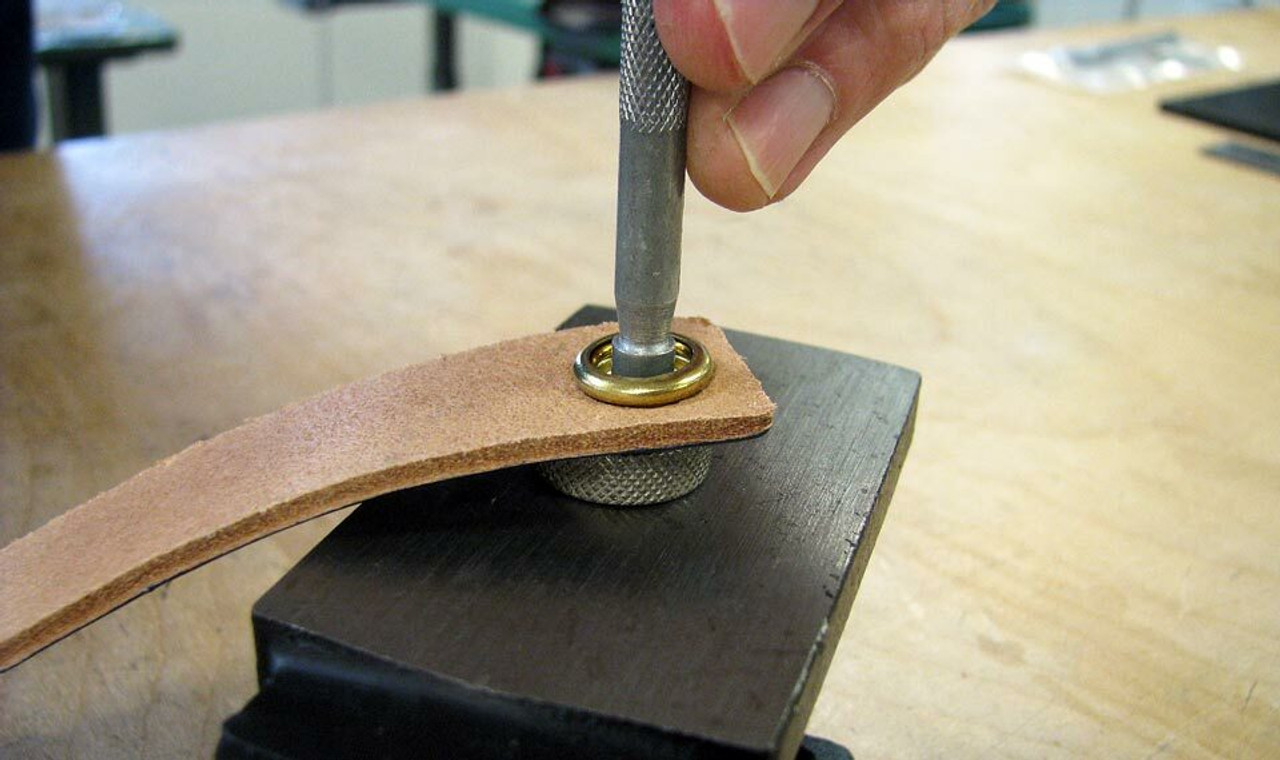
Setting hardware securely is the secret to making leather goods that last a lifetime. Whether you are assembling heavy-duty belts, custom dog collars, wallets, or rugged bags, having the right setter and anvil ensures a clean, professional finish without damaging your leather or flattening your hardware.
At Leathersmith Designs, we supply makers across the country with reliable, workshop-tested setting tools. From industry-standard C.S. Osborne tools made in the USA and Ivan tools to versatile multi-piece setter kits, our selection ships directly from our Dartmouth, Nova Scotia warehouse—meaning fast delivery across Canada with zero cross-border duty surprises.
Different hardware styles and sizes require dedicated setters to crimp properly. Before you start hammering, make sure you follow two golden rules of hardware installation:
Rapid rivets and double cap rivets are the most popular fasteners for everyday leathercraft.
For maximum strength and a classic, rugged look on heavy-duty gear, solid copper rivets are unmatched.
Tubular rivets are made from heavier-gauge metal than rapid rivets and are ideal for industrial straps and thick leather.
Jacket snaps and heavy-duty spring snaps require a two-piece setting system—a Dot & Rivet Anvil to cradle the smooth cap and a flared setter to roll the post.
While they look similar, eyelets and grommets serve different structural needs:
A bouncy worktable absorbs hammer energy and leads to crooked, weak settings. Always work over a rigid surface—ideally directly over a table leg—and use a cast-iron Mini Anvil or Dot & Rivet Anvil to provide a rock-solid, non-marring foundation for your hardware. A nice anvil comes with the Deluxe Snap All Rivet Setter as it fits a variety a cap sizes and includes the setters for line 20/24 snaps and a rivet setter. This sturdy rivet setter is our favourite because it is a mid size diameter for fitting most rapid rivets without leaving a ring in the rivet cap.
The difference comes down to the cap diameter and post length of the snap. A Line 20 snap setter fits smaller snaps (roughly 12mm caps) best suited for thin leathers like wallets and cardholders. A Line 24 snap setter fits larger, heavy-duty snaps (roughly 15mm caps) built for thicker leathers like belts, coats, and knife sheaths. Using the wrong size setter will crush or dent your snap caps.
Yes—never strike steel setters with a standard metal carpenter's hammer, as metal-on-metal contact will mushroom and ruin the top of your setter. Always use a rawhide, poly, or dead-blow mallet from our Mallets & Hammers collection to protect your tools and deliver clean, controlled strikes.
Bending almost always happens because the rivet post is too long for the combined thickness of your leather layers. As a rule of thumb, the rivet post should stick out only about 1/16" to 1/8" (1.5mm to 3mm) above the top piece of leather before you snap the cap on. If it sticks out further, switch to a shorter post size.
An eyelet is a single piece of metal that curls directly against the back of the leather, which works well for decorative holes or light-duty lacing. A grommet uses a second interlocking metal washer on the back, sandwiching the leather between two pieces of metal. If your project will experience heavy pulling or tension—such as a boot lace hole or bag closure—a grommet is much stronger and prevents the leather from ripping.
All of our setters, anvils, and Leather Hardware ship directly from our shop in Dartmouth, Nova Scotia. Ordering from within Canada means you get fast domestic delivery, transparent pricing, and no unexpected customs brokerage fees or border delays. Plus, orders over $199 qualify for free shipping to Canadian provinces!